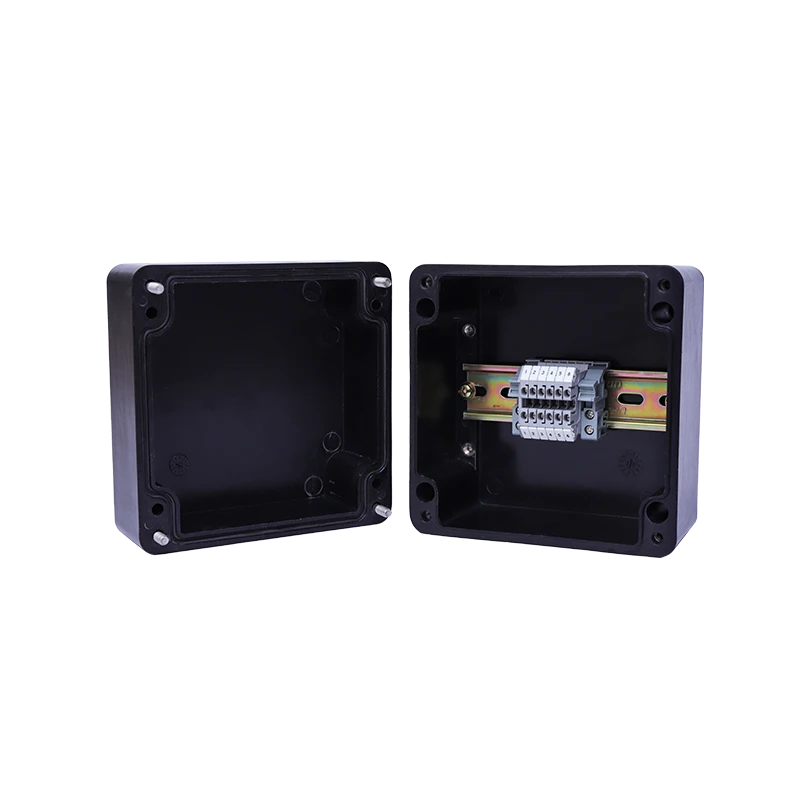
Flameproof Control Components are a critical purchasing decision in oil and gas, chemical processing, mining, pharmaceutical, marine, and other hazardous-area projects. For a large project, buyers are not only comparing product prices. They are evaluating certification validity, hazardous-area suitability, technical support, delivery capacity, documentation, installation risk, and the supplier's ability to remain reliable throughout the entire project lifecycle.
This guide explains a practical, step-by-step method for evaluating explosion proof electrical equipment suppliers. It is designed for procurement managers, electrical engineers, EPC contractors, project consultants, and purchasing groups that need to compare suppliers fairly and reduce technical, commercial, and compliance risks.
Start With the Project Hazard and Equipment Requirements
The first purchasing mistake is asking suppliers for a general quotation before defining the hazardous-area requirements. A supplier can offer a certified product that is still unsuitable for the actual gas group, dust group, temperature class, enclosure type, or installation environment.
First Step: Collect the Project Technical Information
Before contacting suppliers, gather the information that determines the correct explosion proof equipment specification.
- Project location and country of installation.
- Applicable certification system, such as IECEx, ATEX, UL, CSA, CCC, or another local approval.
- Hazardous-area classification, such as Zone 0, Zone 1, Zone 2, Zone 20, Zone 21, or Zone 22.
- Gas group or dust group, such as IIA, IIB, IIC, IIIA, IIIB, or IIIC.
- Required temperature class, such as T1, T2, T3, T4, T5, or T6.
- Ambient temperature range.
- Ingress protection requirement, such as IP65, IP66, or IP67.
- Power supply voltage, frequency, current, and phase configuration.
- Short-circuit current rating and electrical load data.
- Enclosure material, corrosion resistance, and surface treatment requirements.
- Required cable entry type, thread standard, cable diameter, and cable gland material.
- Installation location, including indoor, outdoor, coastal, offshore, underground, or high-altitude conditions.
- Required quantity, spare quantity, delivery schedule, and commissioning date.
- Project-specific inspection, testing, packing, labeling, and documentation requirements.
Second Step: Convert the Requirements Into a Technical Schedule
Prepare one technical schedule for every equipment category. Do not rely on informal emails or general descriptions such as "explosion proof junction box" or "hazardous area control station." The schedule should state exactly what the supplier must provide.
| Parameter |
Information to Request |
| Product type |
Control station, junction box, distribution box, lighting fixture, cable gland, switch, plug, socket, or panel |
| Protection concept |
Ex d, Ex e, Ex ia, Ex ib, Ex t, or the protection concept required by the project |
| Certification |
Certificate number, certification body, issue date, product scope, and certificate status |
| Area classification |
Zone, equipment protection level, gas group, dust group, and temperature class |
| Electrical data |
Voltage, current, frequency, contact arrangement, power rating, and terminal capacity |
| Mechanical data |
Dimensions, weight, mounting method, enclosure material, and cable entry arrangement |
| Environmental data |
IP rating, ambient temperature, corrosion protection, UV resistance, and salt spray performance |
| Documentation |
Datasheet, drawings, certificates, manuals, test reports, inspection records, and spare parts list |
Check Whether the Supplier Can Meet the Required Certification
Certification is one of the most important factors when evaluating explosion proof equipment suppliers. A product may be described as explosion proof in marketing materials but may not be certified for the exact installation conditions of the project.
Third Step: Verify the Certificate at the Source
Ask the supplier for a complete and readable certificate before approving the product. Do not accept only a certificate number, a brochure statement, or a cropped image.
- Record the certificate number and certification body.
- Search for the certificate in the official database of the certification body.
- Confirm that the certificate is active and has not been suspended, withdrawn, or replaced.
- Check that the certified manufacturer name matches the company offering the product.
- Check that the product model and enclosure configuration match the quotation.
- Confirm the certified protection concept, gas group, dust group, temperature class, and equipment protection level.
- Review special conditions of use listed in the certificate.
- Check whether cable glands, terminals, windows, switches, or other accessories must be installed in a specified way.
- Confirm that any certificate suffix or revision applies to the current product design.
- Save the verified certificate and revision date in the project document system.
Fourth Step: Compare Certification With the Installation Classification
The certificate must match the complete hazardous-area requirement, not just one part of it. For example, an enclosure certified for Zone 2 may not be suitable for a Zone 1 location. A product approved for gas group IIB may not be appropriate for a IIC environment.
- Zone or division suitability.
- Gas or dust group suitability.
- Temperature class suitability.
- Equipment protection level suitability.
- Ambient temperature suitability.
- Ingress protection suitability.
- Material and corrosion suitability.
- Compatibility of cable glands and accessories.
If the supplier cannot clearly explain how the certificate matches the project classification, place the supplier on technical hold until the issue is resolved.
Evaluate the Supplier's Technical Product Capability
Large projects usually require more than one standard product. The supplier must be able to provide compatible Flameproof Control Components, enclosures, control stations, junction boxes, cable glands, switches, terminals, and accessories without creating inconsistent certification or installation problems.
Fifth Step: Review the Product Range and Customization Limits
Ask the supplier to identify which requirements are standard and which require engineering approval. A supplier with a broad catalog is not necessarily capable of safe customization.
- Standard enclosure sizes and materials.
- Available control buttons, selector switches, indicator lights, meters, and emergency stops.
- Terminal block types and terminal capacity.
- Available cable entry positions and thread standards.
- Window, hinge, drain, breather, and mounting options.
- Surface coatings for corrosive or offshore environments.
- Availability of stainless steel, aluminum alloy, cast iron, or reinforced polyester versions.
- Ability to provide stainless steel nameplates and permanent product labels.
- Availability of spare parts and replacement components.
- Limits on drilling, machining, painting, and internal wiring modifications.
Sixth Step: Review Drawings Before Purchase Approval
Request a general arrangement drawing and technical data sheet for every non-standard item. Drawings should be reviewed by engineering, procurement, installation, and maintenance teams.
Check the following details:
- Overall dimensions and mounting hole locations.
- Door opening angle and access clearance.
- Internal component layout.
- Cable entry locations and cable bending space.
- Terminal identification and wire numbering.
- Grounding and bonding points.
- Drain and breather locations.
- Label position and readability.
- Weight and lifting requirements.
- Compatibility with the support structure and cable tray.
Assess Manufacturing Quality and Quality Control
A valid certificate does not eliminate the need to evaluate manufacturing quality. Poor machining, incorrect fasteners, weak seals, inadequate coating, or unauthorized design changes can create safety and project risks.
Seventh Step: Request a Supplier Quality Package
Ask each shortlisted supplier to provide evidence of a controlled manufacturing process. The package should be reviewed by the quality team and compared against the project quality plan.
- Quality management certification, where applicable.
- Manufacturing process description.
- Incoming material inspection procedure.
- Dimensional inspection procedure.
- Electrical testing procedure.
- Pressure or enclosure testing procedure, where applicable.
- Ingress protection testing records.
- Routine test reports and sample test reports.
- Calibration certificates for inspection equipment.
- Nonconformance and corrective action procedure.
- Traceability procedure for materials and components.
- Final inspection checklist.
Eighth Step: Conduct a Factory Audit for High-Value Projects
For large or safety-critical projects, a factory audit is more reliable than relying only on brochures. The audit can be performed by the buyer, an EPC quality team, or an independent inspection agency.
- Confirm the factory address and production ownership.
- Compare the legal company name with the certification and quotation documents.
- Inspect raw material storage and material identification controls.
- Review machining, casting, welding, assembly, wiring, and coating processes.
- Check whether certified components are controlled separately from non-certified components.
- Review production records for similar products.
- Inspect test equipment and calibration status.
- Review how engineering changes are approved and documented.
- Check packaging, labeling, and export preparation areas.
- Record findings, corrective actions, responsible persons, and deadlines.
Evaluate Project Delivery Capacity and Supply Chain Reliability
Large-project buyers often face strict delivery milestones. A supplier with a low price can still create major losses if drawings are late, materials are unavailable, or production capacity is overstated.
Ninth Step: Request a Detailed Delivery Plan
Ask the supplier to divide the delivery period into measurable stages instead of providing only one final delivery date.
- Technical clarification completion date.
- Drawing submission date.
- Drawing approval date.
- Material procurement period.
- Production start date.
- Factory acceptance test date.
- Third-party inspection date.
- Final documentation date.
- Packing completion date.
- Shipment date and estimated transit time.
- Site delivery date.
Tenth Step: Check Capacity With Evidence
Ask the supplier to explain how the order will be managed if several projects are being produced at the same time. Useful evidence includes production schedules, staffing information, critical component stock, subcontractor controls, and references from comparable projects.
Important questions include:
- How many units of the requested product can be produced per month?
- Which components have the longest procurement lead time?
- Are certified components manufactured in-house or sourced from other companies?
- What is the backup plan for delayed raw materials?
- How are urgent design changes handled?
- Can the supplier provide partial shipments?
- How will damaged or rejected units be replaced?
- Who is responsible for project coordination and escalation?
Compare the Supplier's Documentation and Communication
Purchasing groups often underestimate the cost of incomplete documentation. Missing certificates, incorrect drawings, and inconsistent model numbers can delay engineering approval, customs clearance, installation, and final acceptance.
Review the Required Document List
Include document requirements in the request for quotation so suppliers can price and schedule them correctly.
- Commercial quotation.
- Technical compliance statement.
- Product datasheets.
- General arrangement drawings.
- Wiring diagrams.
- Terminal schedules.
- Material certificates.
- Explosion protection certificates.
- Routine test reports.
- Inspection and test plan.
- Factory acceptance test procedure and report.
- Installation and maintenance manual.
- Certificate of conformity.
- Spare parts list.
- Packing list and shipping documents.
- Recommended storage conditions.
Evaluate Response Quality During the Tender Stage
The quotation process reveals how the supplier may perform after purchase. Evaluate whether the supplier answers the actual technical questions or sends a generic catalog.
Give higher scores to suppliers that:
- Identify unclear or conflicting specifications.
- Provide a clear compliance statement.
- List deviations openly.
- Explain assumptions and exclusions.
- Use consistent model numbers across the quote, drawings, and certificates.
- Respond within the agreed communication time.
- Assign a qualified technical contact.
- Provide realistic lead times instead of unsupported promises.
Compare Total Cost Instead of Unit Price
The lowest unit price may not be the lowest project cost. Purchasing groups should compare the complete cost of ownership, including engineering, inspection, shipping, installation, maintenance, spare parts, and the financial effect of delays.
Build a Total Cost of Ownership Worksheet
Include the following cost categories in the comparison:
- Product purchase price.
- Engineering and customization cost.
- Certification and documentation cost.
- Testing and third-party inspection cost.
- Packaging and export preparation cost.
- Freight, insurance, customs, and local delivery cost.
- Installation tools and labor cost.
- Commissioning and troubleshooting cost.
- Spare parts and replacement cost.
- Warranty support cost.
- Cost of delayed delivery or rework.
- Cost of replacing a non-compliant product.
Use a Weighted Supplier Scorecard
A scorecard reduces subjective decision-making and allows procurement, engineering, quality, and project management teams to evaluate suppliers using the same criteria.
| Evaluation Category |
Suggested Weight |
| Certification and technical compliance |
25 percent |
| Product quality and manufacturing controls |
20 percent |
| Delivery capacity and schedule reliability |
15 percent |
| Documentation and communication |
10 percent |
| Commercial price and payment terms |
15 percent |
| Warranty, service, and spare parts |
10 percent |
| Company stability and project references |
5 percent |
Adjust the weights according to project risk. For a high-risk offshore or chemical project, certification, quality, and delivery reliability should normally receive more weight than the lowest price.
Check References, Warranty, and After-Sales Support
Large projects need support after shipment. The equipment may require clarification during installation, replacement parts during commissioning, or technical assistance during operation.
Request Comparable Project References
Do not request only a general customer list. Ask for references that are comparable in product type, hazardous-area classification, industry, quantity, and delivery scale.
Confirm the following information:
- Customer industry and project location.
- Equipment types and quantities supplied.
- Applicable certification system.
- Delivery year and project status.
- Whether the supplier met the agreed delivery schedule.
- Whether technical or quality problems occurred.
- How quickly warranty issues were resolved.
- Whether spare parts remain available.
Review Warranty and Support Terms
The contract should define the warranty period, response time, replacement procedure, and responsibility for defects. It should also state whether the warranty is affected by installation, storage, commissioning, or maintenance conditions.
Ask the supplier:
- How long is the standard warranty?
- What defects are covered?
- How quickly will technical questions be answered?
- What is the process for reporting a nonconforming product?
- How quickly can replacement parts be shipped?
- Are installation manuals available in the required language?
- Can the supplier provide remote or on-site commissioning support?
Use a Controlled Supplier Selection Process
A clear selection process helps prevent commercial pressure from overriding safety and compliance requirements.
Recommended Supplier Evaluation Sequence
- Define the hazardous-area and project requirements.
- Prepare the technical schedule and document list.
- Identify suppliers with relevant product and certification capability.
- Issue the same request for quotation to all shortlisted suppliers.
- Complete a technical compliance review.
- Verify certificates through official certification databases.
- Review drawings, deviations, and customization details.
- Evaluate manufacturing quality and factory audit results.
- Compare delivery plans and production capacity.
- Calculate total cost of ownership.
- Check references, warranty, and after-sales support.
- Score suppliers using a weighted evaluation matrix.
- Resolve all open technical and commercial questions.
- Approve the supplier and freeze the technical specification.
- Include inspection, documentation, change control, and warranty terms in the purchase contract.
Required Tools for the Evaluation
The following tools help the purchasing group complete a consistent evaluation:
- Project hazardous-area classification drawings.
- Equipment datasheet template.
- Supplier request for quotation template.
- Technical compliance matrix.
- Certificate verification checklist.
- Factory audit checklist.
- Supplier scorecard.
- Total cost of ownership spreadsheet.
- Document register.
- Deviation and clarification log.
- Inspection and test plan.
- Reference check questionnaire.
- Contract risk and warranty checklist.
- Document management system for revision control.
Avoid These Common Supplier Evaluation Mistakes
Mistake One: Choosing Only by Unit Price
A low price does not compensate for an invalid certificate, late delivery, poor documentation, or expensive rework. Compare total project cost and technical risk before making a commercial decision.
Mistake Two: Accepting a Certificate Without Verifying the Model
Some suppliers may provide a certificate for a similar product rather than the exact quoted configuration. Verify the model, enclosure size, components, protection concept, and certificate revision.
Mistake Three: Ignoring Special Conditions of Use
Certificates may contain specific installation conditions. These can include required cable glands, fastener grades, sealing methods, ambient temperature restrictions, or inspection requirements. Ignoring them can make an otherwise certified installation non-compliant.
Mistake Four: Approving Customization Without Certification Review
Drilling additional cable entries, changing switches, replacing terminals, modifying windows, or adding accessories may affect the certified design. Require written technical approval before any modification.
Mistake Five: Using Incomplete Hazardous-Area Information
Do not select equipment based only on a voltage rating or a general statement that the area is hazardous. Confirm the zone, gas or dust group, temperature class, equipment protection level, ambient temperature, and IP rating.
Mistake Six: Failing to Control Document Revisions
Using an outdated drawing or certificate can lead to incorrect manufacturing and installation. Assign document numbers, revision numbers, approval status, and responsible reviewers for every project document.
Mistake Seven: Ignoring Cable Glands and Accessories
The enclosure may be correctly certified while the selected cable glands, plugs, reducers, breathers, or drains are unsuitable. Evaluate the complete installed assembly, not only the main enclosure.
Mistake Eight: Trusting Delivery Promises Without a Production Plan
Ask for a detailed schedule, critical material list, inspection dates, and shipment plan. Include delay notification and recovery requirements in the purchase contract.
Final Approval Checklist for a Large Project
Technical Approval Checklist
- The hazardous-area classification has been confirmed.
- The supplier has submitted a complete technical compliance statement.
- The certificate has been verified through an official source.
- The product model matches the certificate and approved drawing.
- The gas group, dust group, temperature class, and protection level are suitable.
- The enclosure material and surface treatment suit the environment.
- The cable entries and accessories are compatible.
- The electrical ratings meet the project requirements.
- All deviations have been reviewed and approved.
Commercial and Quality Approval Checklist
- The quotation includes all required equipment and accessories.
- The delivery schedule matches the project milestones.
- The inspection and testing requirements are included.
- The documentation list and submission dates are agreed.
- Warranty and spare parts terms are defined.
- Payment milestones are linked to measurable deliverables.
- Change control requirements are included.
- Nonconforming product and replacement responsibilities are defined.
- The supplier has passed the required quality and reference checks.
How MASCO Can Support Your Supplier Evaluation
When comparing suppliers for a large hazardous-area project, MASCO can be evaluated not only by catalog price, but also by certification coverage, product configuration, engineering response, documentation quality, production control, delivery planning, and after-sales support.
When requesting a quotation for Flameproof Control Components, provide MASCO with the project classification, required certification, electrical data, enclosure material, cable entry details, quantity, drawings, delivery schedule, and documentation requirements. This information allows the technical team to propose a more accurate and compliant solution.
A disciplined evaluation process helps purchasing groups avoid unsuitable products, reduce installation delays, and select a supplier that can support the project from design approval through commissioning and maintenance. For safer and more predictable project procurement, verify every certificate, document every deviation, and evaluate the complete supplier capability before ordering Flameproof Control Components from MASCO.


